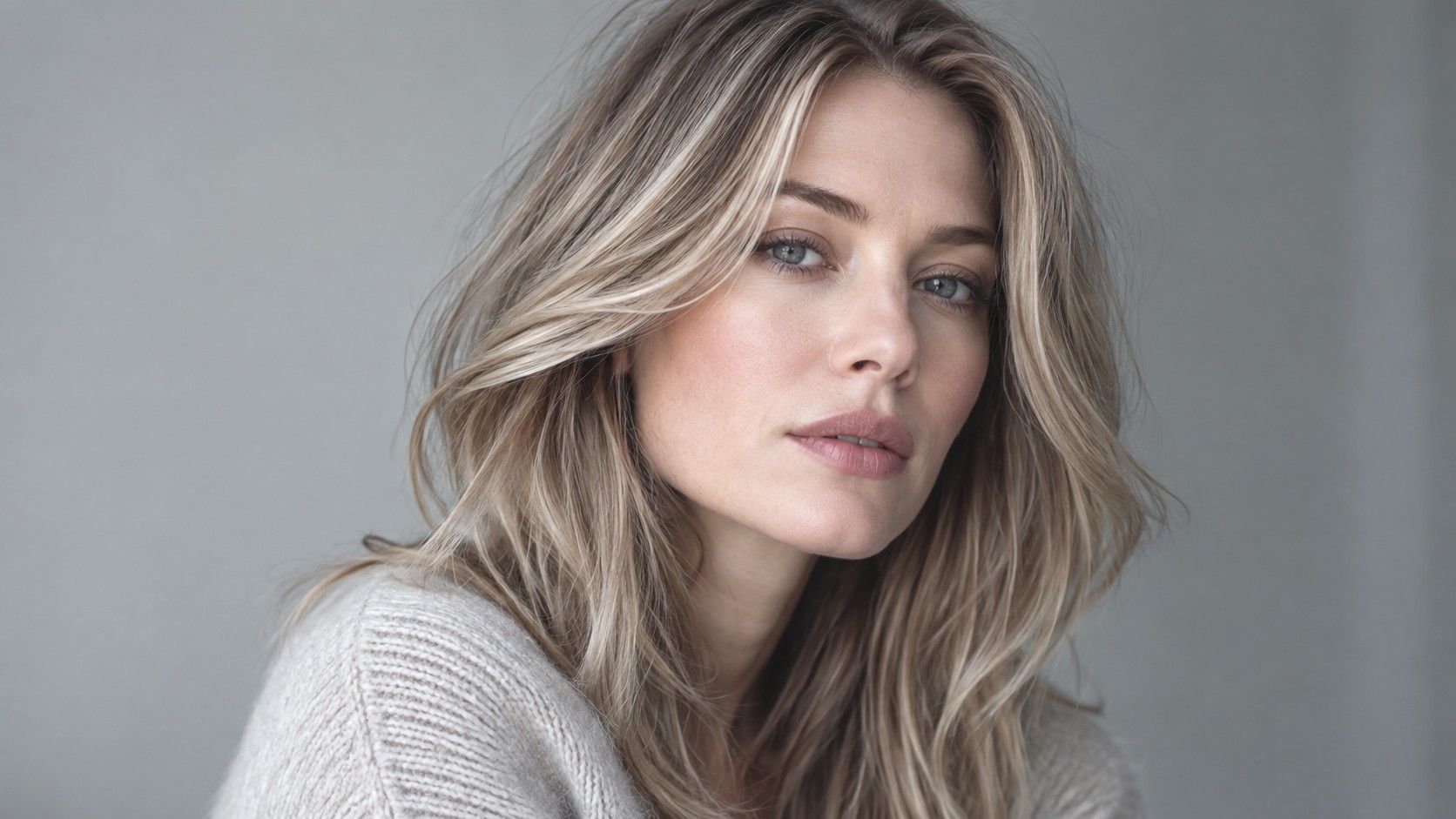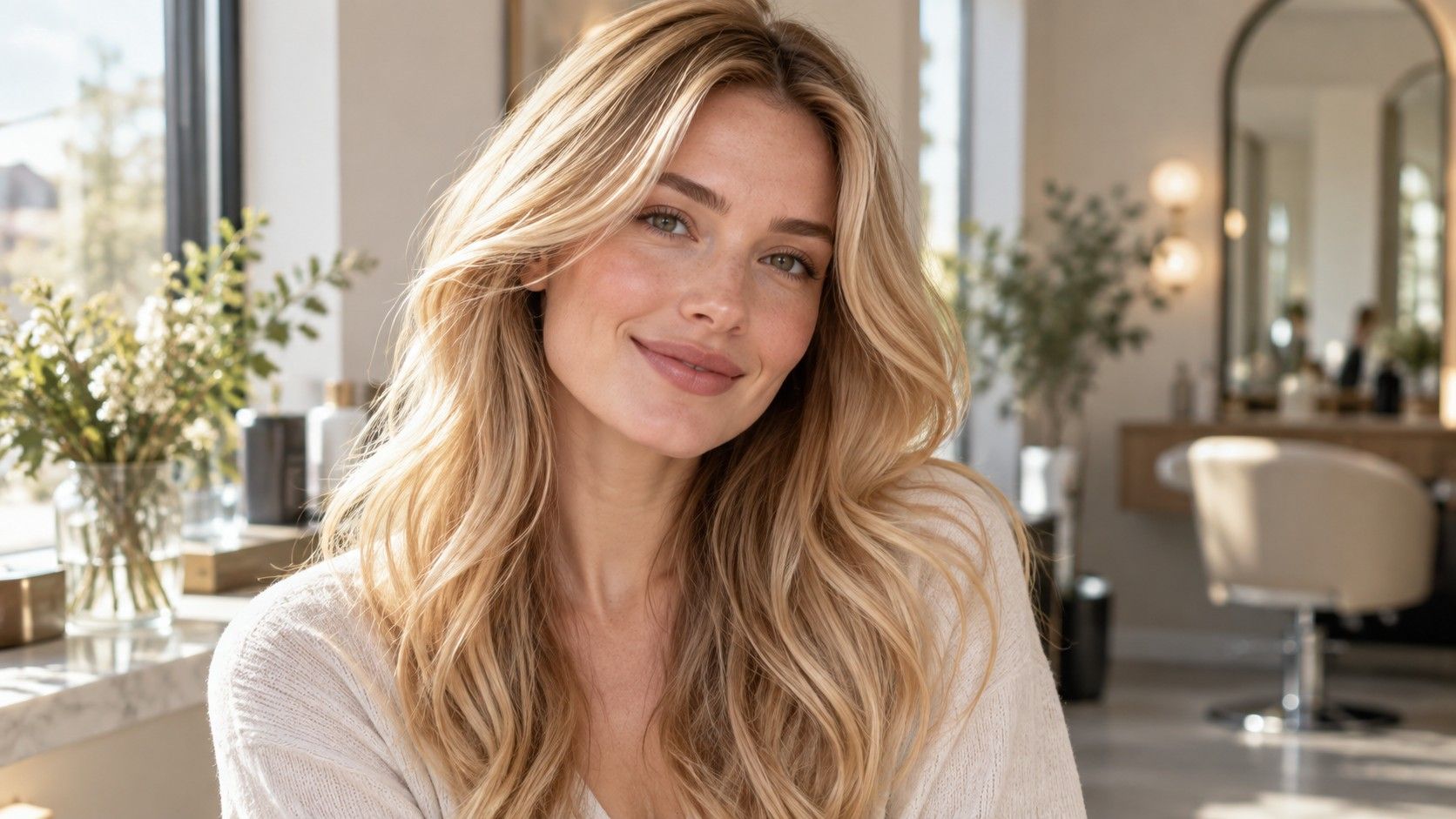
Bright Spring hair colors need two qualities that are easy to separate by accident: warmth and clarity. A color can be warm but too muted, or bright but too icy. The useful shades tend to have a clean golden, caramel, or copper spark while still looking connected to natural roots and brows. The aim is lively hair, not hair that reaches the room before you do.
Why Bright Spring needs clarity as well as warmth
Bright Spring coloring is often described as warm and high contrast, but the word bright does not mean bleach-blonde or vivid red. It refers to a fresh, clear quality. Dusty ash brown, smoky grey blonde, and very matte mushroom tones can make a clear complexion look quieter than it is. On the other hand, a heavy orange or neon copper can overwhelm the face. The most successful balance is warm color with a clean finish.
Look at your natural coloring without strong makeup. If the eyes, brows, and skin have a crisp, clear relationship, hair can usually support a little more shine or saturation than a muted palette could. That does not mean every strand must be light. A deeper warm root with clear golden pieces may create more believable Bright Spring contrast than a flat, pale all-over blonde.
Blonde shades that stay bright without turning yellow
Golden beige is a practical starting point. It has the light-catching quality of blonde but enough neutral softness to avoid the cartoon-yellow effect that worries many people. Think sunlight through wheat rather than a solid block of butter. Fine lighter pieces around the face can add brightness, while a root close to natural depth keeps the overall result grounded.
Honey blonde can work as well, especially for naturally medium blonde or light brown hair. The distinction is important: a clear honey reflection is different from a brassy, uneven lift. If blonde turns yellow in your hair, the answer may be a slightly deeper golden beige or a gloss that restores shine, not an ever-cooler toner. Bright Spring usually benefits from warmth remaining visible, just moderated by good depth and even placement.
| Shade direction | What it adds | When to soften it |
|---|---|---|
| Golden beige blonde | Clear lightness with a natural finish | Use a deeper root if brows are dark |
| Warm caramel | Depth and luminous movement | Choose fine pieces on already dark hair |
| Clear copper | Energy and warmth | Add brown or gold if it feels too vivid |
| Golden chestnut | Brightness without becoming blonde | Keep the gloss fresh so it does not look dull |
Warm brunette and copper can be just as right
Not every Bright Spring needs a blonde result. A golden chestnut, warm medium brown, or caramel brunette can have the same clear warmth with more depth. These directions are especially helpful when the natural brow and root color are medium to dark. The hair retains contrast against the face but does not ask for a dramatic maintenance routine every few weeks.
Clear copper is another possibility when the skin can handle warmth and the natural coloring does not look muted beside it. The wearable versions usually contain gold or brown, so the color changes subtly between indoor and outdoor light. Before committing, try a copper gloss or low-contrast warm pieces. Red tones fade differently from brown and blonde, so a beautiful first-day shade is only half the decision; you also need to like its softer faded version.
Keep contrast lively but believable
Bright contrast does not require stripes. A strong blonde face frame over a very dark base can be fashionable, but it is not automatically flattering for every Bright Spring. More often, contrast looks polished when it is distributed: a slightly deeper root, clear mid-length dimension, and a few brighter pieces where hair catches light. This gives the face definition without creating an abrupt helmet effect.
Natural saturation matters too. If your eyes are bright and your skin has warmth, a small amount of shine can make hair look healthier than a matte finish. That can come from a gloss, careful conditioning, or color placement rather than an extra level of lightening. The best result should still suit the way you wear your hair on an ordinary day, whether it is air-dried, tied back, or slightly frizzy around the hairline.
Test a brighter direction gradually
Moving from soft brown to clear golden blonde all at once makes it hard to tell whether the problem is tone, depth, or simply the surprise of a big change. A staged approach gives better information. Begin with a warm gloss, then add a handful of fine light pieces, then decide whether you actually want more brightness. Photos in indirect daylight are valuable because they reveal when a color looks yellow, flat, or disconnected from the skin.
Wear your usual colors while comparing. Bright Spring hair often looks especially harmonious near clear coral, warm turquoise, ivory, and fresh green, but a shade should not depend on a special wardrobe to work. If the hair makes your face look awake beside a simple cream shirt and stays clear after a few washes, it is probably on the right track.
Ask for a color story, not a single label
Names such as caramel, honey, and copper are broad enough to hide very different outcomes. Describe the level of brightness you want, the amount of visible warmth you can tolerate, and whether you prefer a natural root or an all-over shift. Bring photos with similar hair texture and starting depth; a smooth, pale reference on thick dark curls may not translate literally.
One final check is whether the shade still has a little transparency. Hair colored too dark and opaque can hide the natural flashes of gold that make this palette feel lively. A gloss, subtle lowlights, and pieces with slightly different warmth can keep a brunette or blonde from looking painted on. In bright daylight, you should see movement between the tones rather than one heavy block.
Bright Spring hair color is most convincing when warmth looks fresh rather than muddy and brightness looks intentional rather than harsh. Golden beige, warm caramel, clear copper, and luminous chestnut can all work. The right one is the shade that keeps the face clear first, then gives the hair its extra spark.