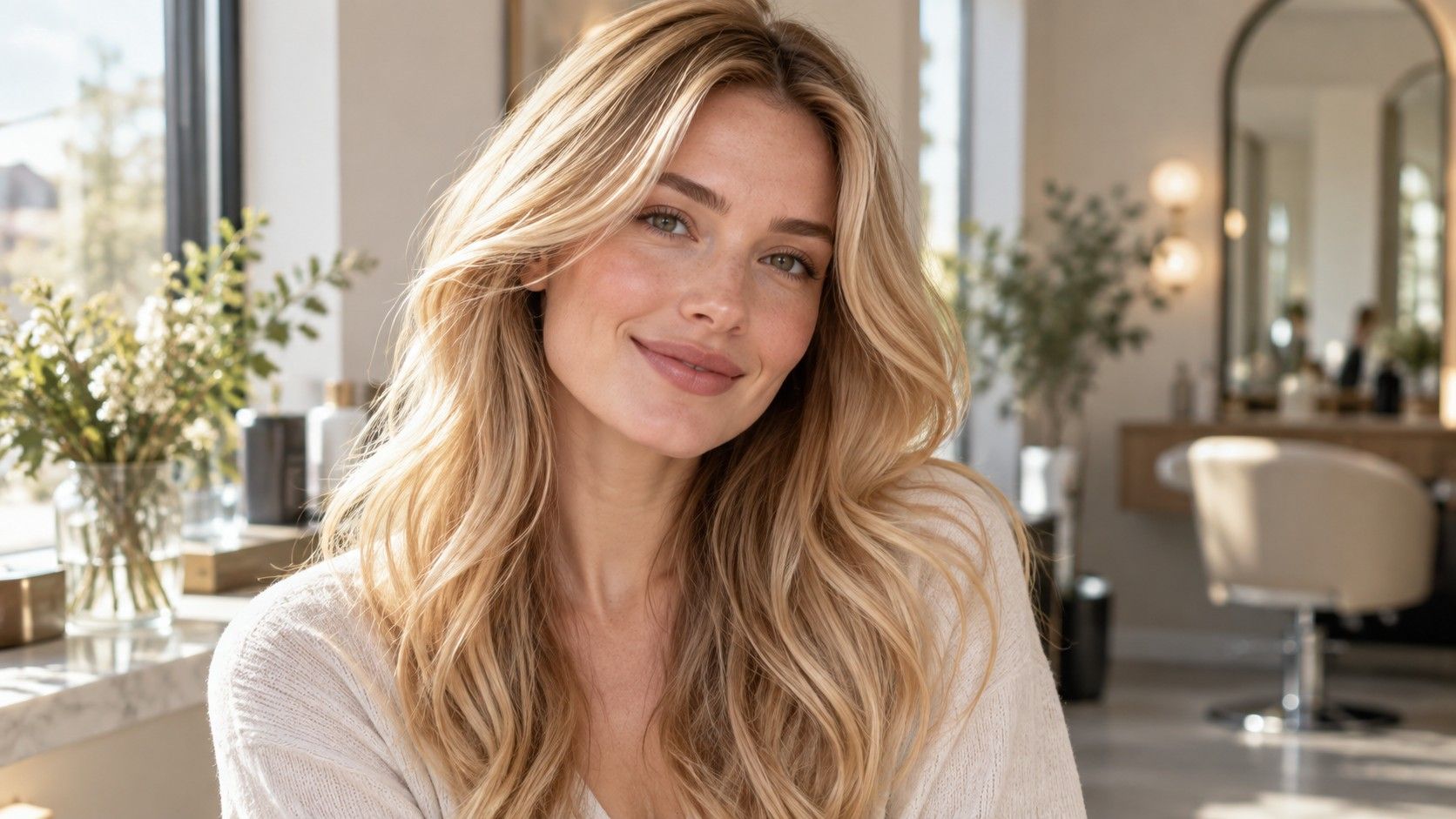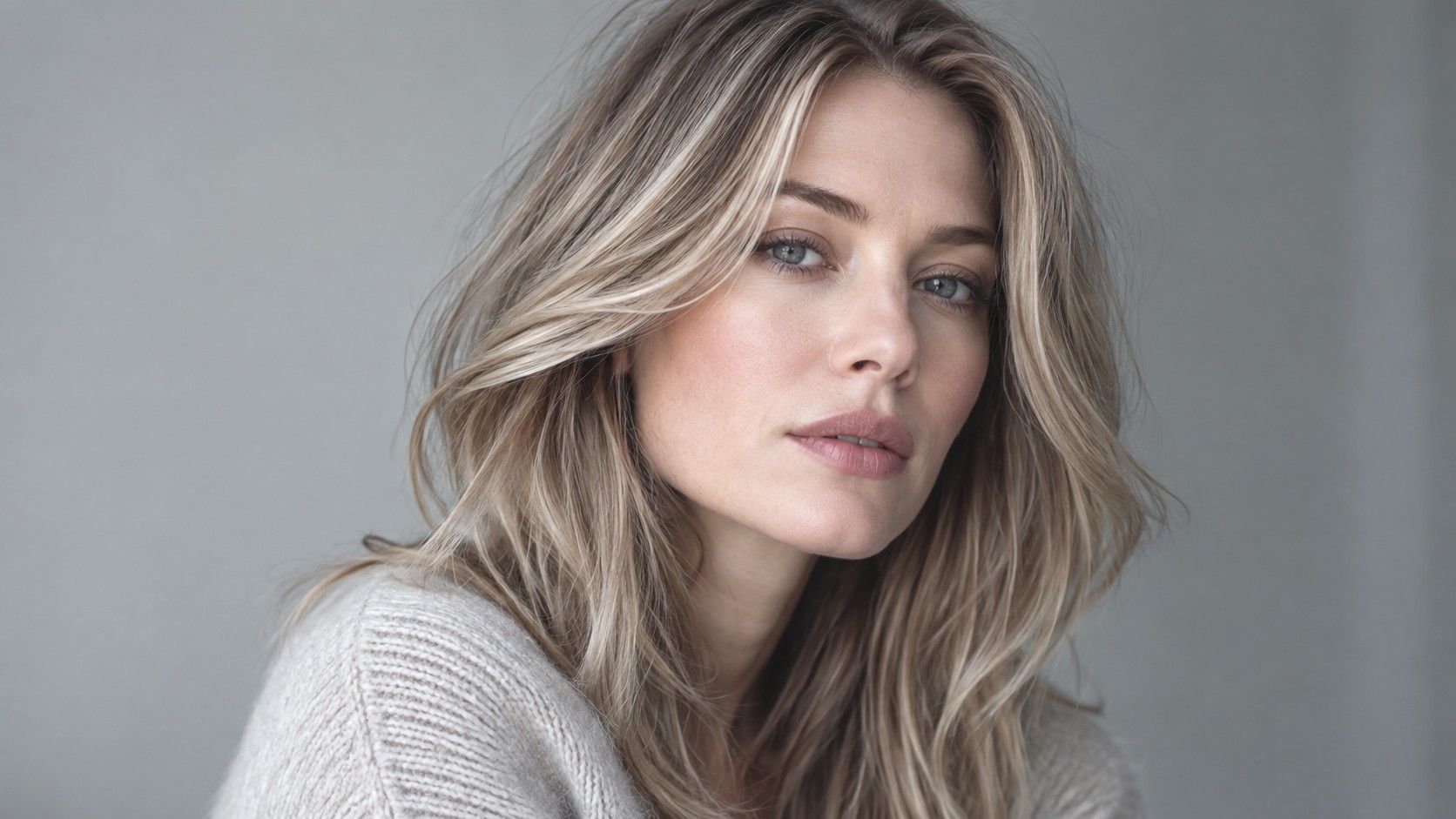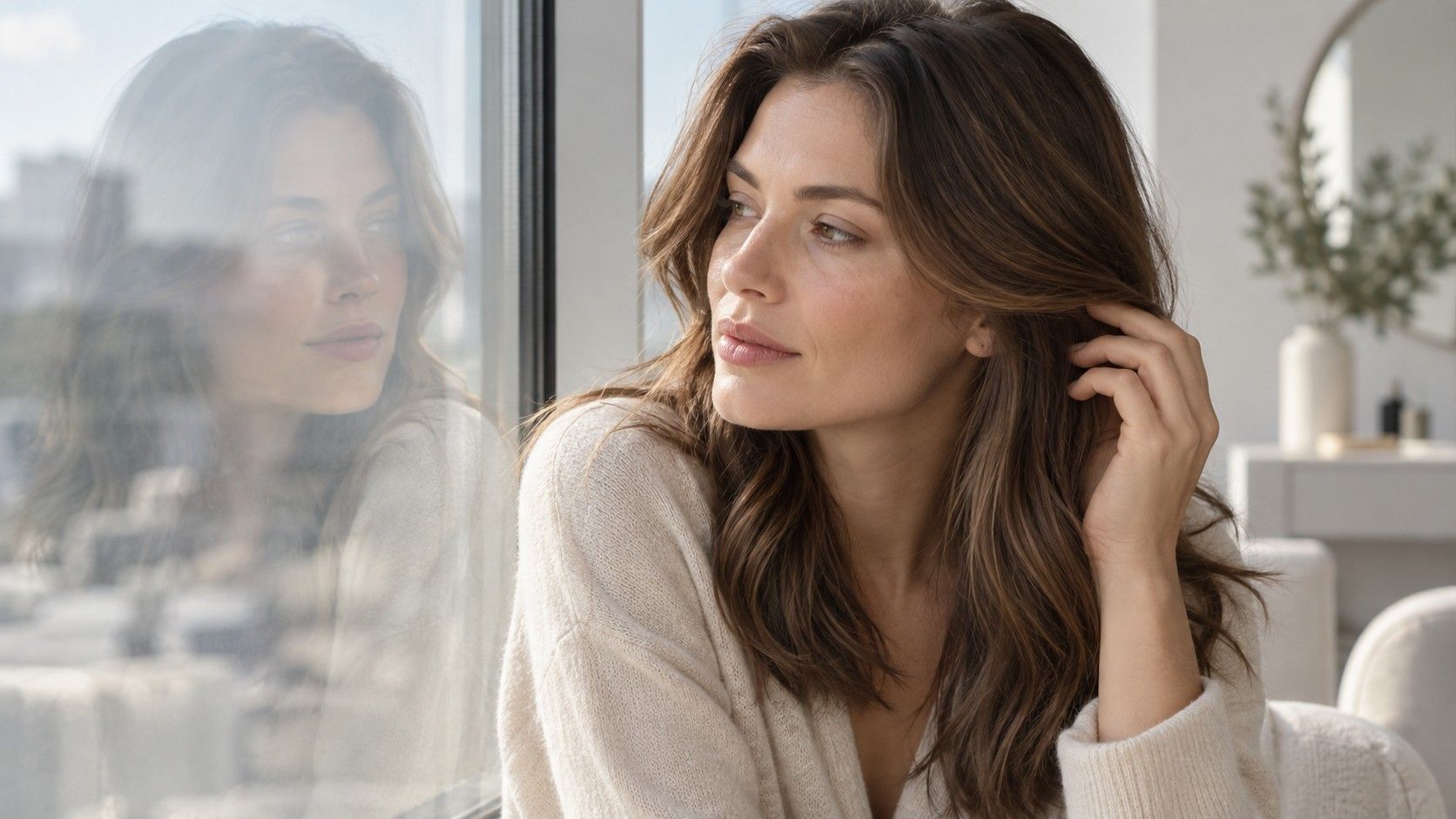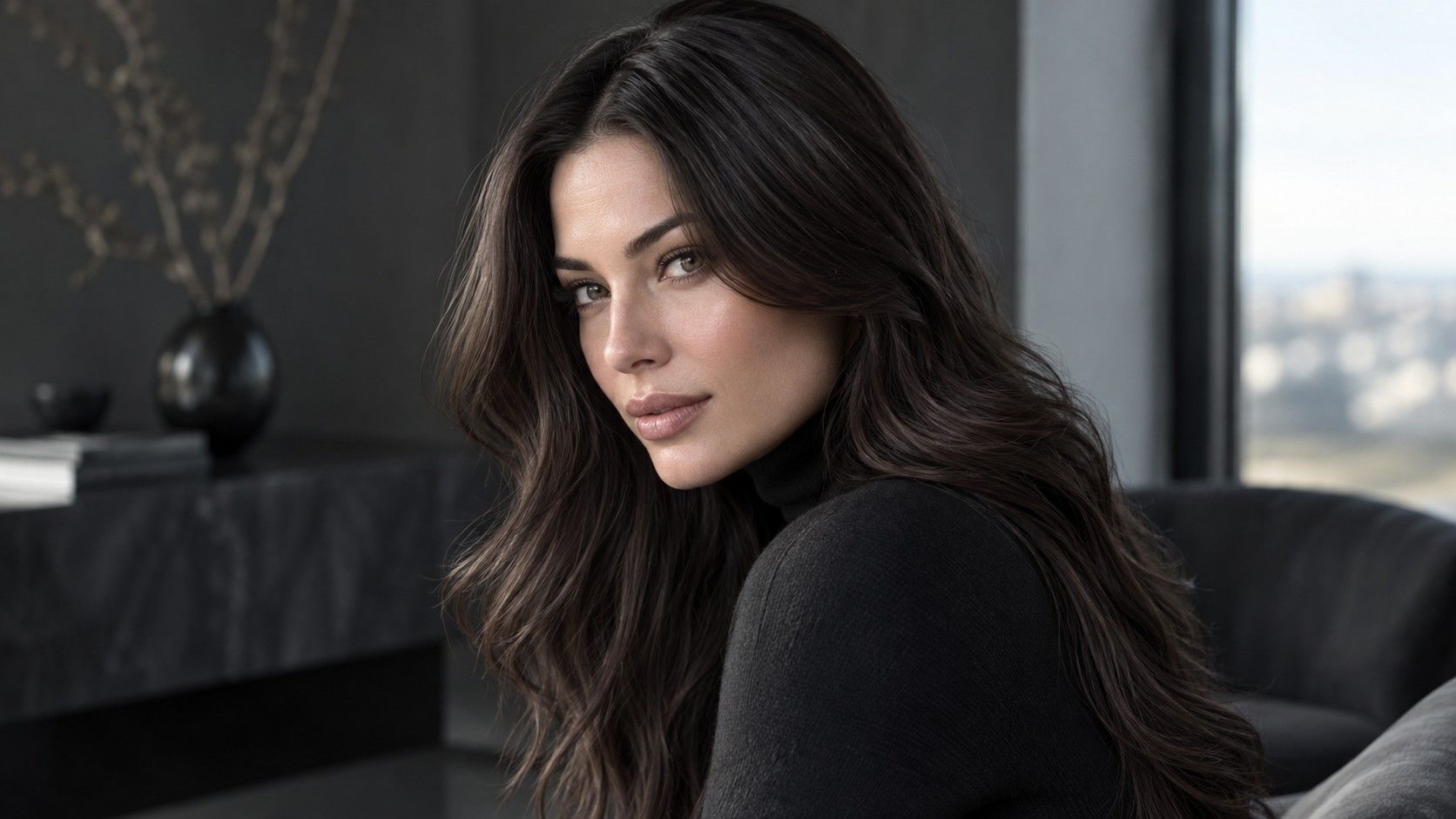
Cool Winter hair colors can carry depth and contrast, but they still need to look cool and clean. The tempting mistake is to choose the darkest color on the chart and call it done. A better result comes from matching depth to the natural brows, eyes, and skin, then deciding whether the finish should be inky, espresso, or lightly brightened around the face.
Why Cool Winter needs both depth and clarity
Cool Winter palettes generally have a cool undertone and a clearer, more contrasted appearance than the Summer palettes. Dark hair and bright or strongly defined eyes are common, though not required. Color that is too muted can make the face look dusty; color that is warm can make the complexion look sallow. The aim is a shade with an unmistakable cool edge and enough shine to show its depth.
Check hair color in daylight against a white shirt or a cool gray top. A good Cool Winter shade makes the eyes look more distinct and lets the skin stay even. A reddish brunette may look rich indoors but show orange beside the temples outside. Conversely, a flat charcoal-black can remove dimension from fine hair. Depth is useful here, yet light reflection is what keeps it looking intentional.
Choose a dark base that has movement
Cool espresso, blue-black, dark ash brown, and neutral black are common directions for Cool Winter. The best choice depends on natural depth. If your roots are medium brown, moving straight to opaque black can create an artificial line as it grows. A deep espresso with cool reflect is often more forgiving and still gives the clear definition the palette handles well.
Ask whether the formula will expose red after several shampoos. Underlying warm pigment is normal in dark hair, particularly after a lift or color removal, and it can return as the gloss fades. A colorist may use a cool base with a controlled blue or violet modifier rather than simply adding ash. The result should remain brunette in sunlight, not become navy, purple, or dull gray.
Use lighter accents as crisp punctuation
Cool Winter can wear a lighter accent, but the accent needs a clear tone and a disciplined placement. Icy beige, silver-ash, cool mushroom, and a very cool dark blonde can work as fine face-framing pieces or carefully blended highlights. Broad warm ribbons usually interrupt the high-contrast logic. When the base is dark, even a small amount of brightness is visible, so there is no need to overfill the hair with highlights.
Consider where your part falls and how you usually wear your hair. A few cool pieces near the front can open the face, while highlights hidden in the lower layers may only show when you move. If your hair is straight and dense, ask to avoid repeated horizontal bands; they can look stripy against a dark base. Curly hair tolerates a little more visible placement because the pattern breaks up the line.
| Natural starting point | Cool Winter option | Practical caution |
|---|---|---|
| Medium to dark brown | Cool espresso with glossy depth | Watch red warmth as toner fades |
| Near-black | Neutral black or subtle blue-black | Avoid an opaque helmet effect |
| Dark base with gray | Cool brunette blend with fine silver dimension | Keep highlights crisp, not yellow |
Stop warmth before it takes over the result
Warmth is most obvious at the hairline, on faded ends, and in old highlights. Orange, copper, and honey tones can be beautiful on other palettes, but they often disrupt a Cool Winter result because they blur the cool contrast. That does not mean every strand must be silver. A neutral-cool brown with healthy shine is usually more natural than an aggressively ashy formula that turns porous hair flat.
At home, use toning products with restraint. Blue shampoo is aimed at orange in darker hair; purple shampoo addresses yellow in lighter pieces. Leaving either on too long may produce uneven smoky patches, especially over bleached ends. If brass returns very quickly, do not keep piling on pigment. Tell your colorist whether it is yellow, orange, or red and how long it took to appear; that helps identify whether the correction belongs in the lift, the filler, or the toner.
Match the color to natural contrast, not a trend photo
High contrast is part of the Cool Winter appeal, but it is personal. Someone with dark brows and pale, clear skin may look balanced in neutral black, while someone with softer brows may prefer espresso and a sharper lip color instead. Compare the hair to the brow depth and eye definition. If the hair is much darker than both, it can dominate; if it is too light, the face can lose the crisp frame it naturally has.
Before a permanent move, test the intended depth in a glossy demi-permanent service or with a few lowlights. Photograph it in daylight, indoor light, and evening light. The best hair color for Cool Winter should feel coherent in all three, not only under a salon ring light. This small test is particularly valuable when transitioning from highlights, because filling pale hair back to a cool brunette needs more than applying a dark dye over yellow lengths.
Keep the finish clear between appointments
Clear does not mean high-maintenance perfection. Protect dark color from repeated hot tools, use a heat protectant, and keep clarifying washes occasional if the hair is already dry. A gloss can restore shine and cool reflect without another full color application. If gray coverage is part of the service, ask how the formula will soften as it grows so that the line at the roots remains manageable.
Bring an honest photo of your current hair to the appointment rather than only inspiration shots. Include a photo in direct daylight, when unwanted warmth is easiest to see. That gives the colorist a workable starting point and helps you arrive at a Cool Winter hair color that is deep, cool, and visibly alive instead of merely dark.
One last check is the neckline and lower layers. These areas often fade warmer because they receive friction from clothing and are skipped by surface styling products. A sheer cool gloss through the lengths can preserve the overall edge without making the roots heavier at every appointment.