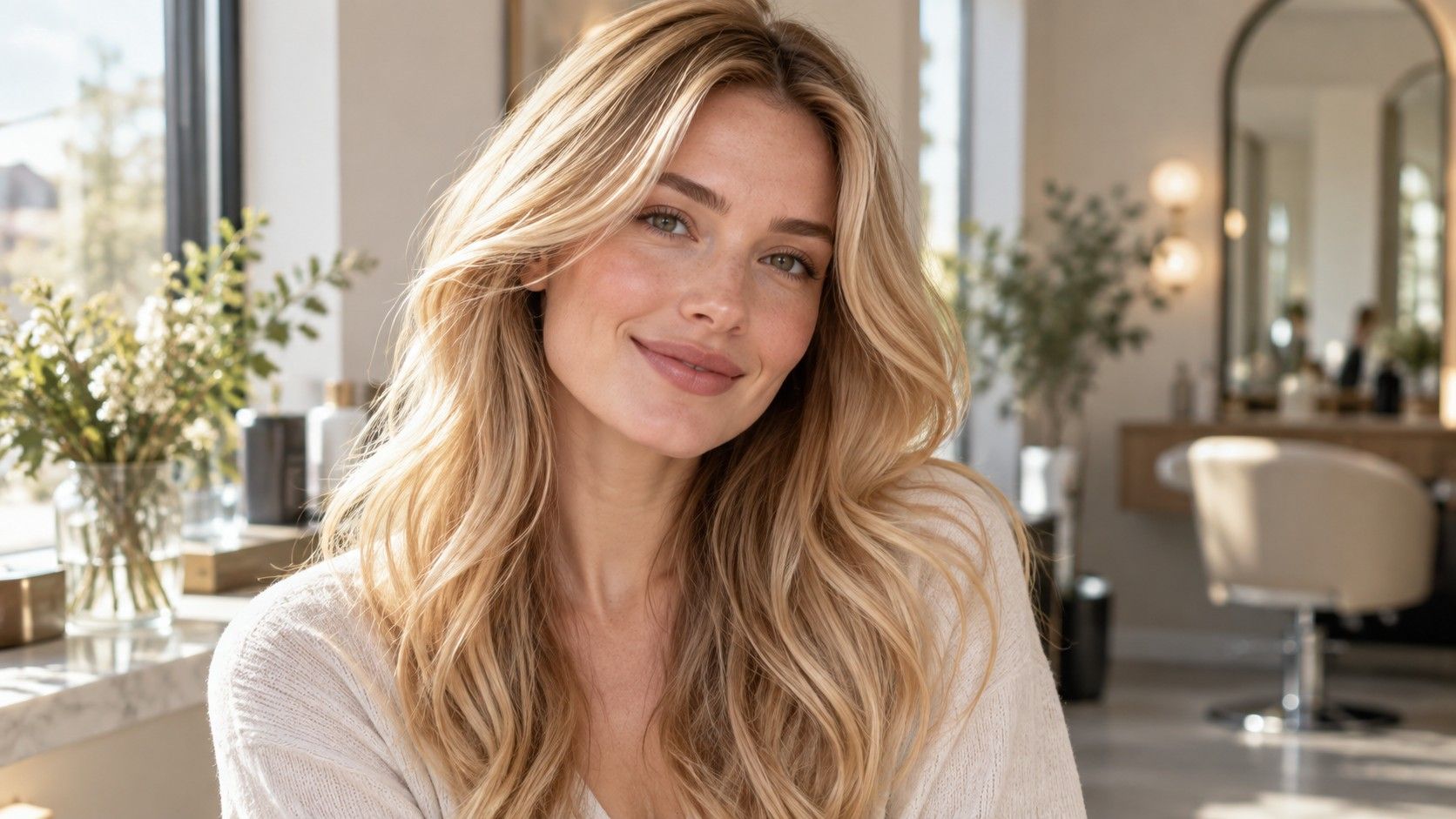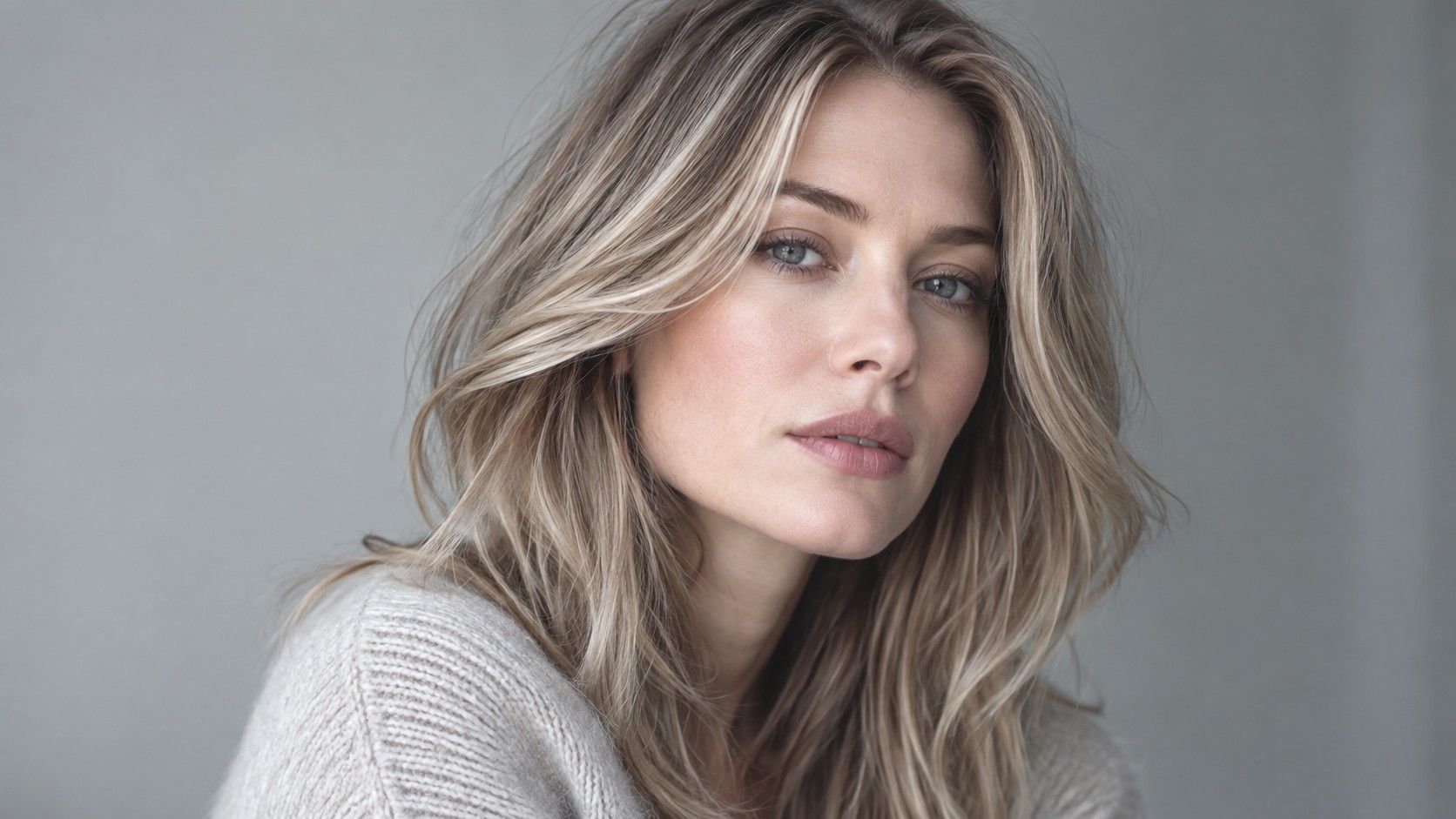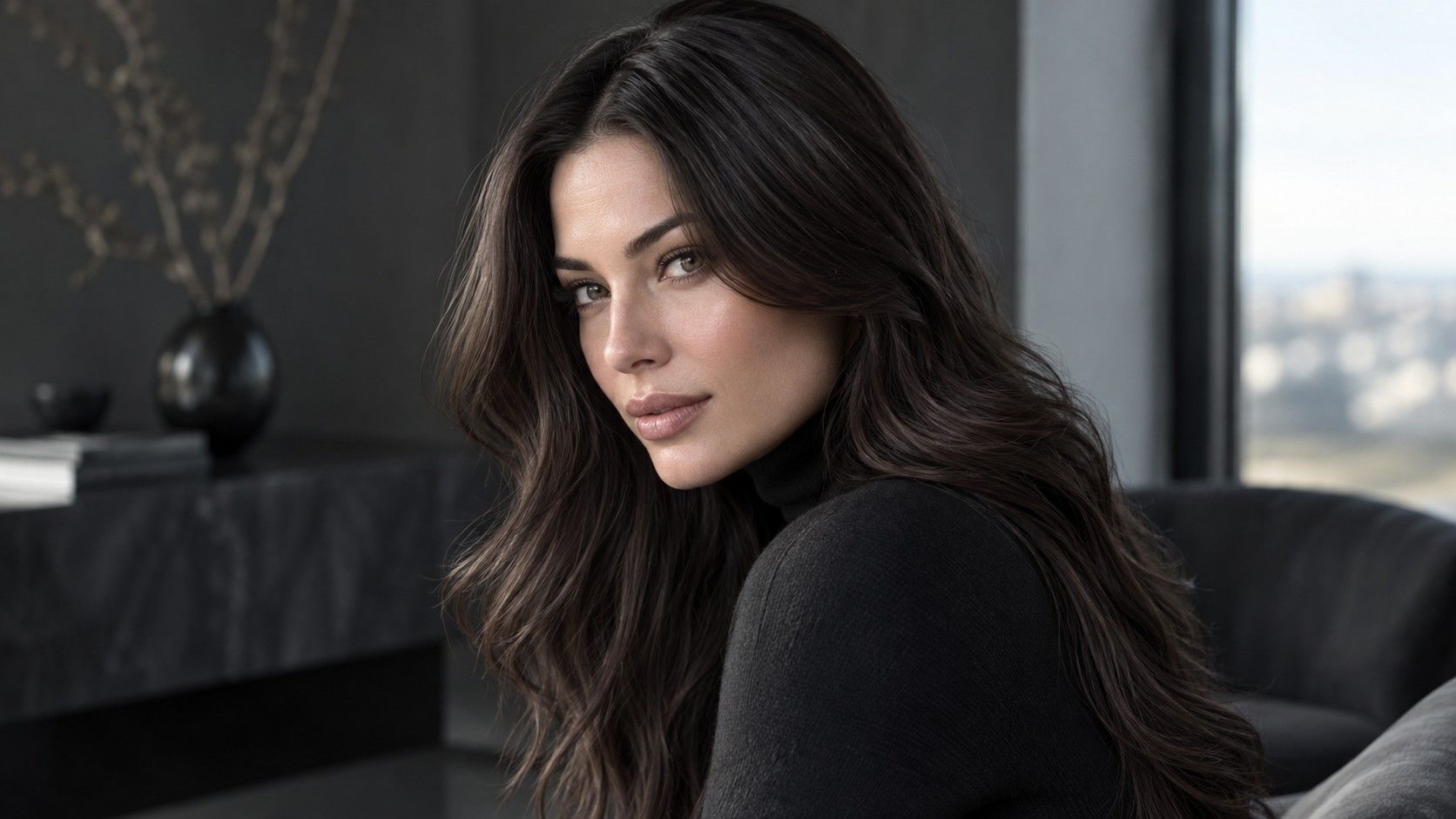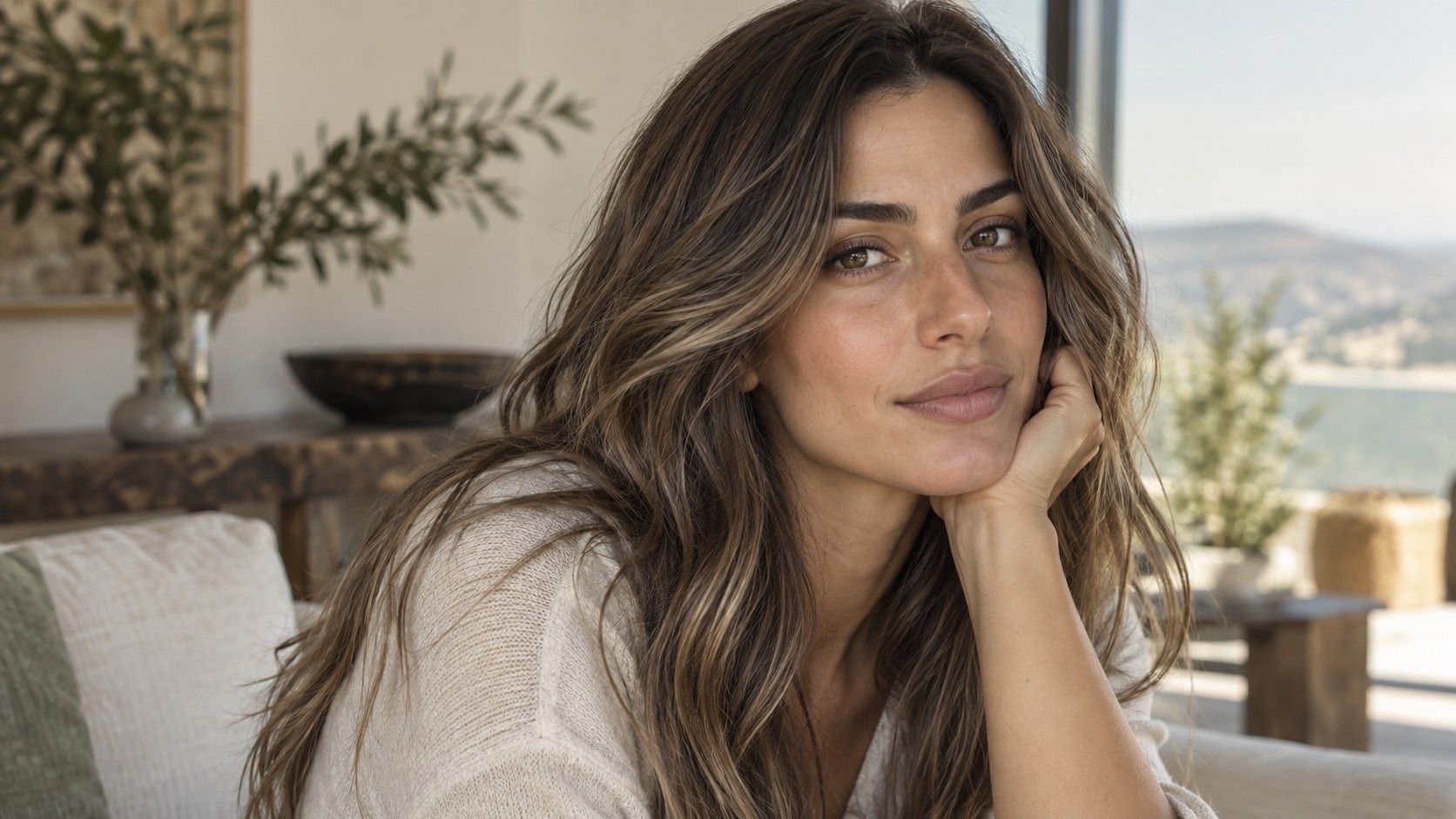
Finding a hair color for olive skin is less about discovering one approved shade and more about noticing the way skin changes in different light. Olive skin can look golden in one room, softly grey-green in another, and nearly neutral in a photograph. That shifting quality is why a color that looks perfect on a swatch can make the face look tired once it is actually worn.
Why a simple warm-versus-cool rule often fails
Olive is not a single undertone. Some complexions lean warm and golden, some lean cool and muted, and many sit in a neutral middle with a greenish cast at the surface. Hair color interacts with that surface color as well as with the undertone underneath. A strongly orange blonde may bring out sallowness in one person, while an icy ash blonde may make another person look washed out. Neither result means olive skin cannot wear warmth or coolness; it means the intensity was wrong.
Begin with bare skin in daylight, away from a car window, bathroom bulb, or heavily filtered camera. Notice whether cream, camel, olive, charcoal, and clear white make the complexion look even or uneven. Then look at the natural hair root and eyebrows. These clues are more useful than a single wrist-vein test because they show the whole level of contrast your face already carries.
Choose depth before chasing a tone name
Depth is the lightness or darkness of the hair, and it often matters first. A pale olive complexion with dark brows may look most balanced with medium brown, dark blonde, or a soft brunette rather than with the lightest possible blonde. Deep olive skin can carry richer espresso, black-brown, mahogany, or luminous caramel with ease, but a flat inky black may still feel severe if the rest of the coloring is low contrast.
For fair olive skin, a large jump in depth can be more noticeable than a change in undertone. Going very dark may create a striking frame, but it also makes unevenness or redness more visible. Staying within two or three levels of the natural root gives you a calmer baseline. A root shadow can help when lighter lengths are appealing but a pale scalp-to-blonde transition feels too abrupt.
| Color family | Often useful for | Adjustment to consider |
|---|---|---|
| Neutral ash brown | Cool or muted olive complexions | Add soft beige so it does not look flat |
| Golden brown | Warm olive skin with medium contrast | Keep the gold subtle near the face |
| Soft black or espresso | Deep coloring and naturally dark brows | Choose brown-black instead of blue-black |
| Beige blonde | Pale olive skin that can support lighter hair | Preserve a deeper root for realism |
Shade directions that usually feel balanced
Ash brown is often suggested for olive skin because it can echo the complexion's muted quality. The good versions are not necessarily grey. A mushroom brown, cool beige brunette, or soft cocoa base can look refined while retaining enough warmth to keep the face alive. If the hair turns khaki or dull next to the skin, the solution may be a little beige or neutral brown rather than more ash.
Golden brown works beautifully for warm olive skin, especially where the complexion naturally picks up peach or gold in sunlight. The key is avoiding an all-over orange cast. A medium chestnut with fine caramel lights, or a warm brown gloss over a brunette base, can be enough. For darker natural hair, small amber pieces placed away from the roots often look more convincing than a broad block of blonde.
Pale olive skin changes the balancing act
Pale olive skin has a particular trap: colors that are too cool can pull green or grey forward, while colors that are too warm can look disconnected from the brows and eyes. Beige, neutral gold, soft strawberry blonde, and medium neutral brown are often easier starting points than extremes. The best hair colors for fair olive skin tend to have a little softness in them, not a hard metallic ash or a bright primary gold.
Look at the hairline as well as the length. A shade that seems flattering from the shoulders down can fail where it touches the forehead and temples. If the front pieces make shadows under the eyes more visible, try a slightly deeper root, a less yellow blonde, or a warmer-neutral gloss. This is also why a single salon photo is not enough evidence; the front framing has to work in ordinary overhead light and on days when you are not wearing makeup.
Use daylight and unedited photos as your test
Hair color previews and salon mirrors are useful, but both can exaggerate shine and smooth over the small color clashes that matter later. Take a photo by a window in indirect daylight, then another outdoors in shade. Keep the same top on so clothing is not changing the comparison. If the new shade gives the face clearer edges and makes the eyes look present without making the skin look yellow or grey, it is doing its job.
Compare two or three nearby options rather than asking whether one color is objectively flattering. For instance, place a neutral medium brown beside a golden medium brown and a cool beige brown. Small differences become obvious in a set: one may make the lips look brighter, another may draw attention to redness, and a third may simply look more like it belongs. That kind of comparison is more reliable than broad rules about what olive skin is allowed to wear.
Keep maintenance part of the decision
A beautiful tone that fades into brass or green within a few washes is not a practical match. Lightened hair has less underlying pigment control, so a pale olive complexion may need a toner or gloss schedule to keep beige blonde from becoming too yellow. A cooler brunette may need careful formulation so it does not fade hollow. Discuss how often you are willing to refresh tone before choosing a high-maintenance direction.
When you are uncertain, a demi-permanent gloss, subtle face frame, or a deeper root shadow is a sensible way to test the relationship between hair and skin. It gives you evidence without making a permanent promise. The most successful hair color for olive skin usually respects the natural mix of warmth, depth, and softness already present, instead of trying to force the complexion into a simple category.