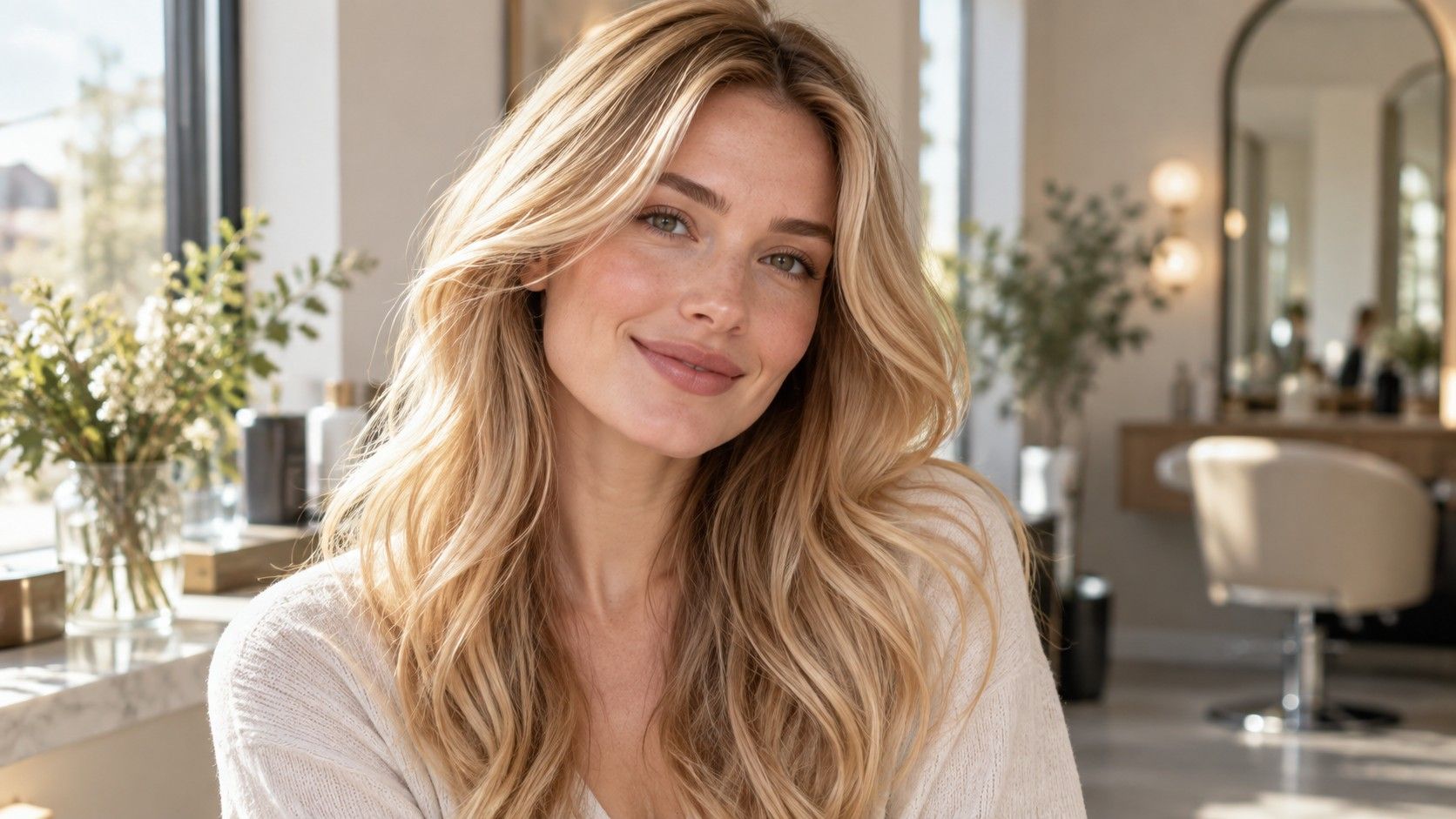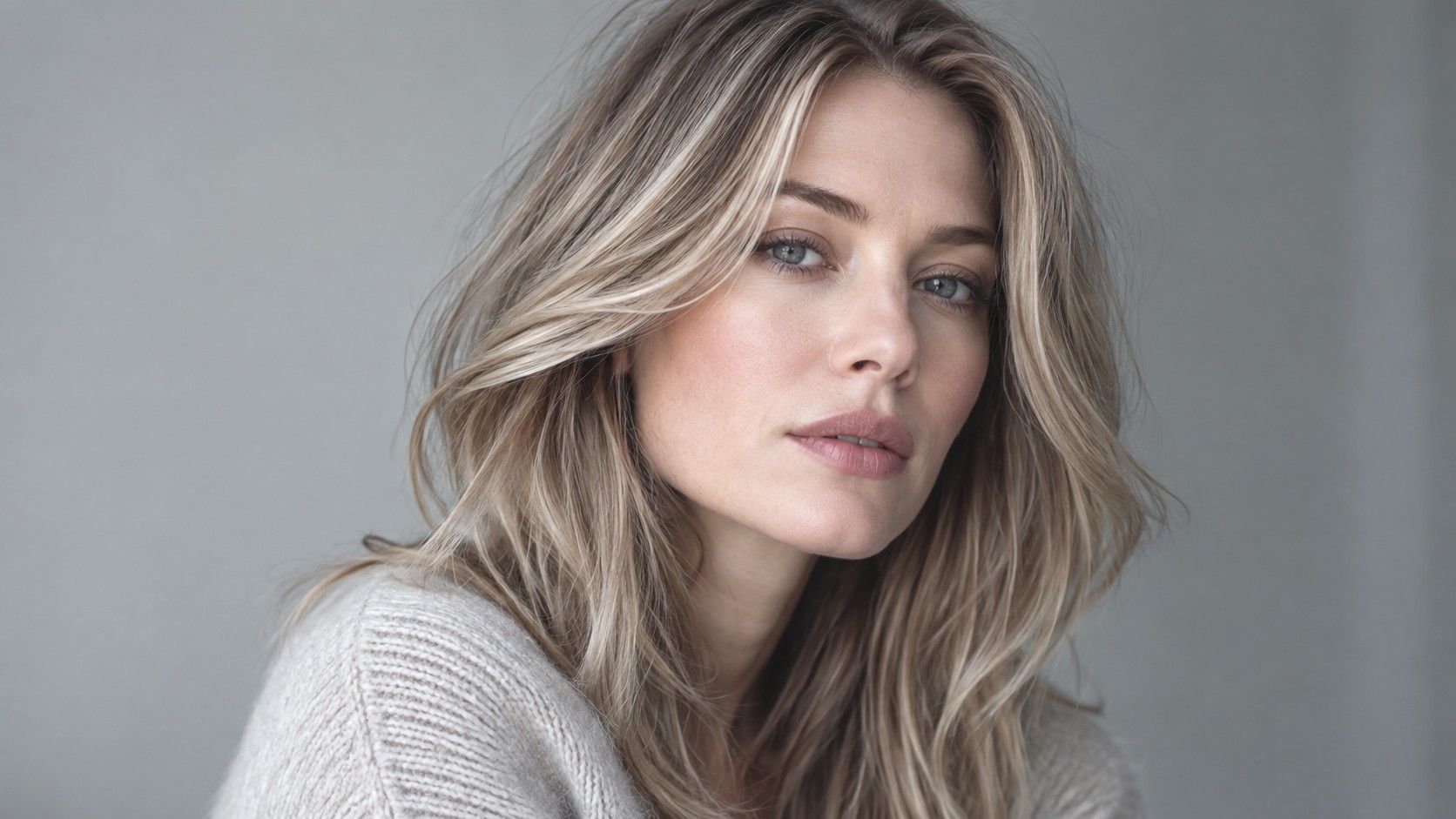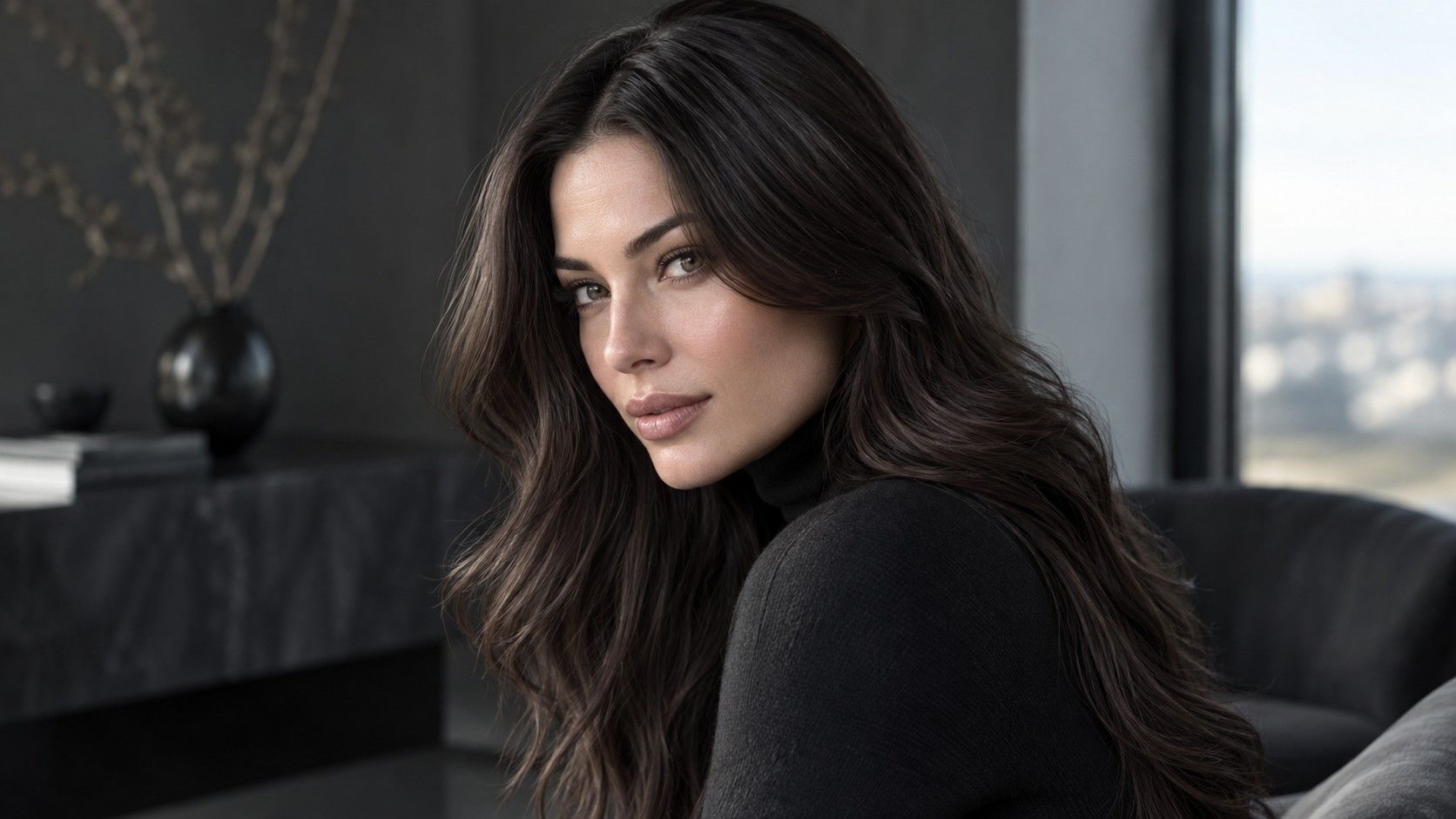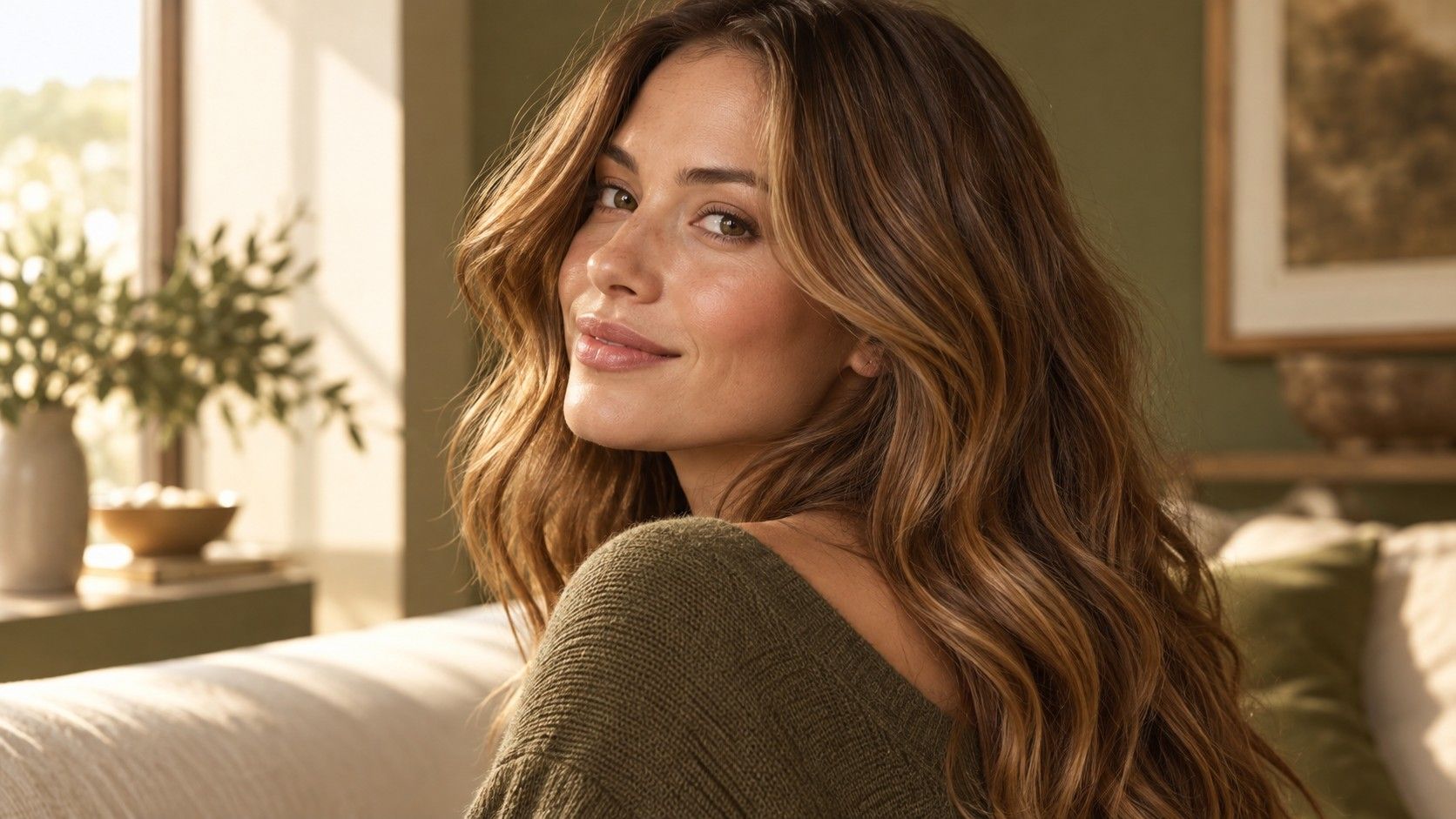
Warm Autumn hair colors work best when they look warmed by daylight rather than coated in orange or yellow. The useful middle ground is rich, muted gold: enough warmth to echo a peachy or golden complexion, enough depth to keep the result believable beside brows, lashes, and everyday clothes. A shade card can make this sound simple; the mirror usually makes it more nuanced.
What warmth should look like on a Warm Autumn palette
Warm Autumn is often described with words such as golden, earthy, and deep, but those labels can send people straight toward the loudest copper in the salon book. That is rarely the only answer. Warmth can live in a soft golden-brown base, a cinnamon reflection, a beige caramel ribbon, or a gentle honey gloss. The better question is whether the color makes the skin look settled and awake, rather than whether the hair is visibly red or yellow.
Start by looking at your natural roots in window light. If they read brown, dark blonde, auburn, or chestnut with a warm cast, a new shade usually needs to keep some of that visual weight. A very pale platinum blonde can disconnect the hair from the face, while a blue-black brown can flatten the golden notes that make an autumn palette feel harmonious. Medium contrast is a helpful guide: the hair should frame the face, not become the first thing people notice from across the room.
Golden brown is the reliable starting point
For many people, golden brown is the easiest entry among warm toned fall hair colors. It has enough depth to look polished at the roots and enough warmth through the lengths to avoid the grey cast that a very ash brown can create. Ask for warmth that is visible in movement, not a solid yellow overlay. A brunette base with fine caramel or honey dimension usually grows out more gently than a dramatic all-over shift.
The word caramel covers several different directions, so photos matter more than the name alone. Pale buttery highlights can look too light against a deeper Warm Autumn complexion. A toasted caramel, maple brown, or golden beige often makes a calmer choice. If your eyes are hazel, green, or warm brown, these shades can bring out the flecks without trying to match them exactly. Hair does not need to repeat eye color; it only needs to leave room for it.
| Shade direction | Best when | Watch for |
|---|---|---|
| Golden medium brown | You want a natural change with warm depth | Too much yellow near the face |
| Toasted caramel dimension | Your base is medium to dark and you want movement | Very pale highlights that create stripes |
| Cinnamon brown | You want warmth without going fully copper | A red cast that overwhelms soft features |
| Soft warm copper | Your natural coloring already carries red or gold | Brightness that needs more upkeep than expected |
When copper is better than another blonde appointment
Copper can be excellent for Warm Autumn, especially when natural hair already has auburn or strawberry notes. The most wearable versions are usually softened with brown, gold, or beige. Think burnished penny, cinnamon, or a warm chestnut with a copper reflection rather than a uniform fire-engine orange. This keeps the result connected to the depth of the palette and makes root growth less abrupt.
Before choosing copper, check the practical side. Red molecules fade faster than many brunette pigments, and hard water, frequent shampooing, and sun can change the reflection noticeably. If you want the feeling of copper but not the maintenance, a warm brown gloss or low-contrast copper balayage gives a similar lift. It also lets you see whether the warmth feels right against your usual makeup-free face before committing to a brighter formula.
Dimension matters more than a dramatic level change
A common mistake is lifting every strand to make the warmth obvious. For a Warm Autumn palette, depth is part of the effect. Leaving a natural-looking root shadow and placing lighter pieces around the cheekbones can create honey dimension without turning the overall result blonde. The eye reads variation as richness, especially outdoors, where a flat single-process color can look darker than it did in the salon chair.
Placement should follow the way you wear your hair. If you part it in the same place every day, a few fine warm pieces at that part and around the front can do more than a full head of bright highlights. If your hair is curly or textured, broader painted ribbons may show the color more naturally than many narrow foils. Bring a current photo showing your normal part, length, and texture; hair color plans built around an idealized blowout are often disappointing at home.
Use clothing and brows as a reality check
The best hair color for an autumn palette should still work on an ordinary Tuesday, not only under salon lighting. Put on a cream, moss, rust, warm navy, or chocolate top and look at the hair near the face. If the shade makes these colors look richer, it is probably moving in a useful direction. If it turns the skin sallow beside them, the color may be too ash, too bright, or simply too light for your natural contrast.
Brows are an equally practical checkpoint. You do not need matching hair and brows, but their depths should look related. A bright honey blonde with dark neutral brows can be intentional, yet it creates a stronger statement than many people expect. Keeping some warm depth at the root, or choosing beige-gold instead of pale yellow blonde, makes the transition easier to live with. The most convincing Warm Autumn result usually looks like your own hair had a particularly good summer, not like a different person arrived home from the salon.
Make the decision in stages when you are unsure
If you are torn between brunette, caramel, and copper, take the lower-commitment route first. A gloss, a few face-framing pieces, or a warm toner can reveal whether golden warmth brightens your face before you change the whole base. Photograph the result near a north-facing window and outside on an overcast day; those conditions expose muddiness and excessive yellow more honestly than a ring light.
Warm Autumn hair colors are not a single prescription. Skin depth, natural contrast, eye color, and maintenance tolerance all change the final choice. The stable thread is warmth with restraint: golden brown before beige ash, copper softened by depth, and highlights that look like light passing through the hair rather than strips placed on top of it.